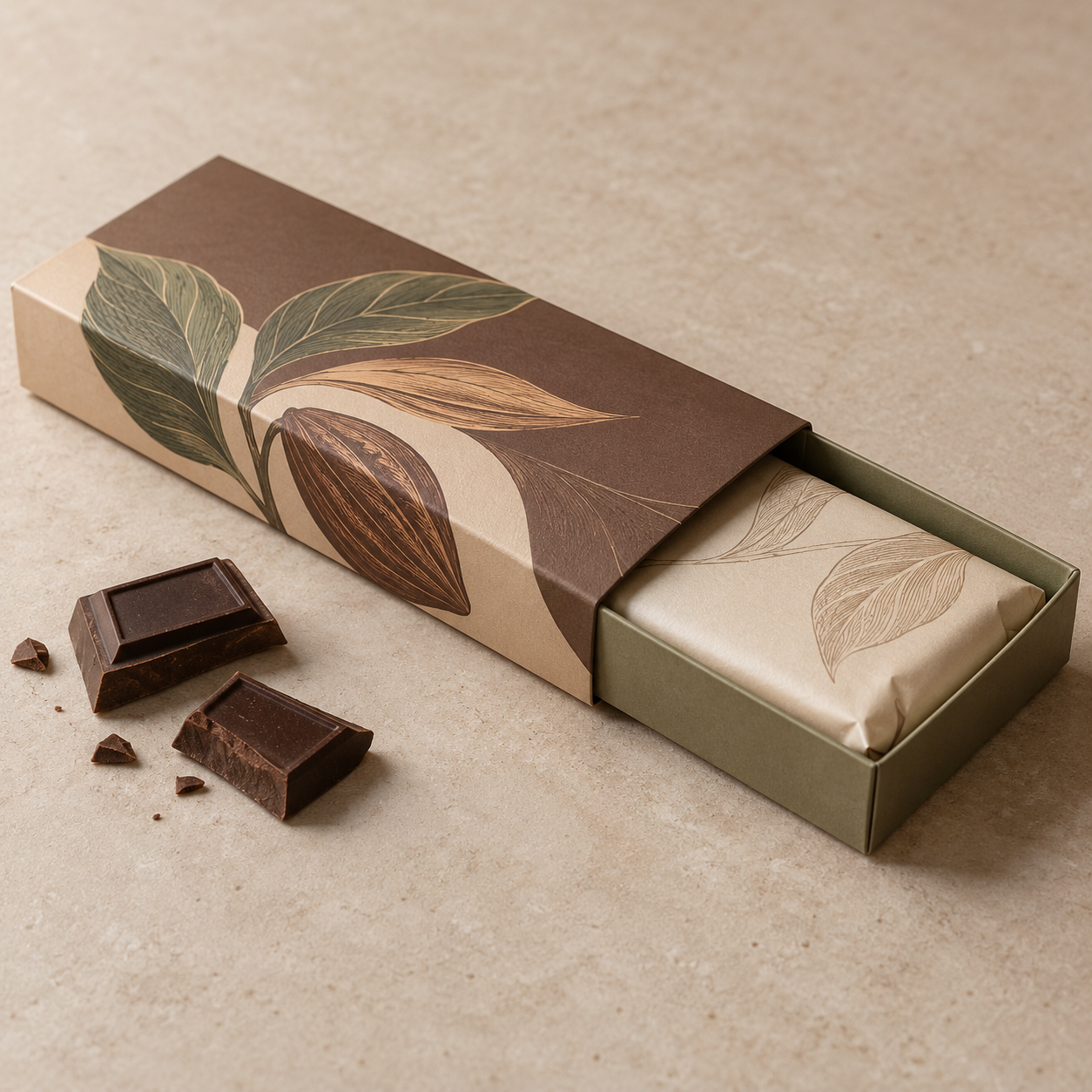
Chocolate Bar Packaging
Printed cartons and sleeves for standard bars, artisan tablets, filled bars, mini bars and retail collections
Explore Chocolate Bar Boxes

Custom chocolate packaging developed around the format, dimensions, piece count and presentation of your products.
DeChen manufactures custom boxes for chocolate bars, bonbons, truffles, pralines, tasting collections and premium gift sets, with coordinated options for inserts, trays, printing and finishing.
Request a Quote
Start with the chocolate itself. Product format affects the required internal layout, clearance, insert design and suitable outer packaging structure.
Printed cartons and sleeves for standard bars, artisan tablets, filled bars, mini bars and retail collections
Explore Chocolate Bar Boxes
Premium chocolate packaging designed for gift collections. seasonal products corporate gifts and brand presentations
Explore Chocolate Gift Boxes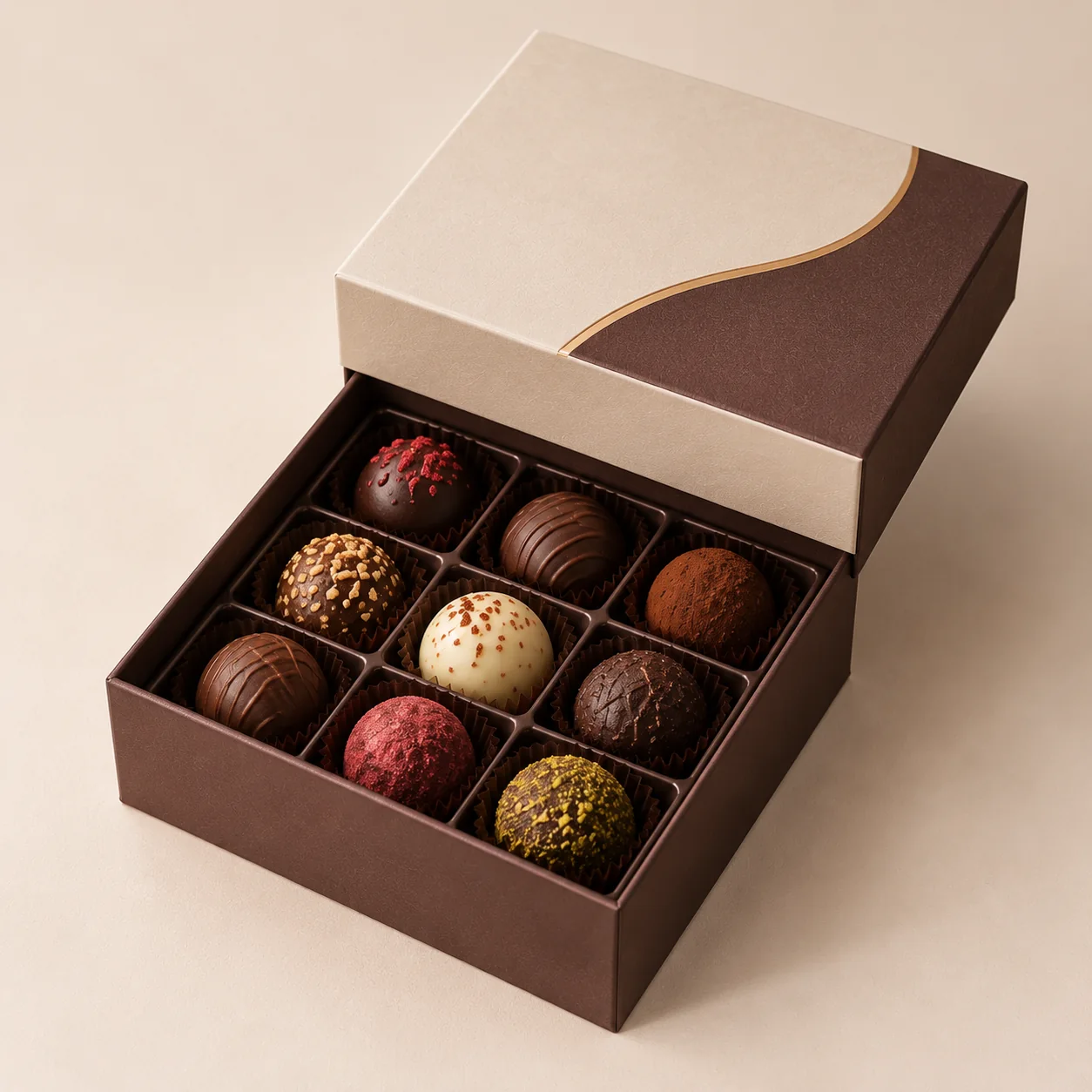
Packaging solutions for truffles andindividual chocolates with inserts. cavitiesand organized layouts
Explore Chocolate Truffle Boxes
Premium rigid packaging structures forluxury chocolate brands, high-end giftsand special collections
Explore Luxury Chocolate Rigid Boxes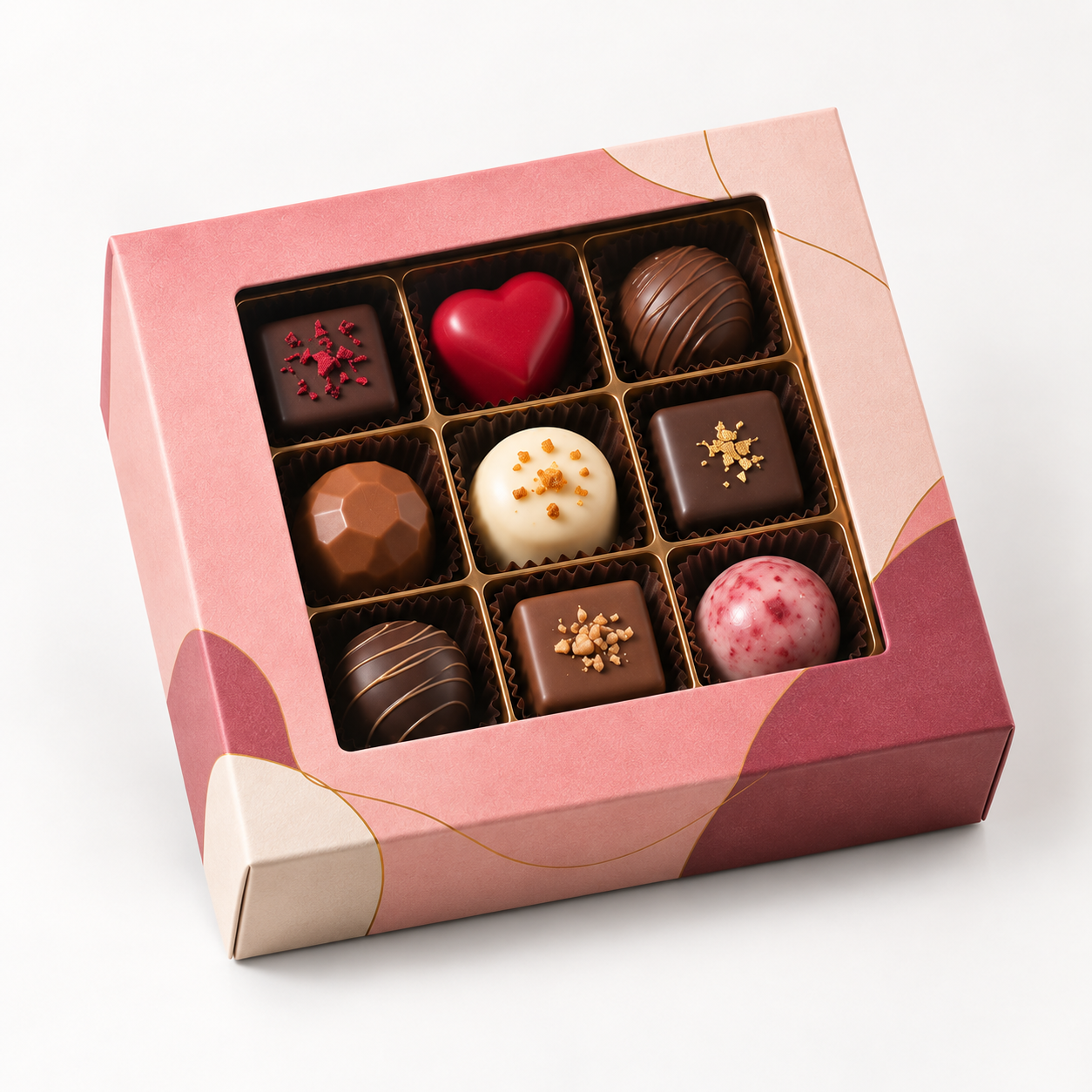
Retail-focused chocolate packaging withproduct visibility options for shelf displayand consumer presentation
Explore Chocolate Window Boxes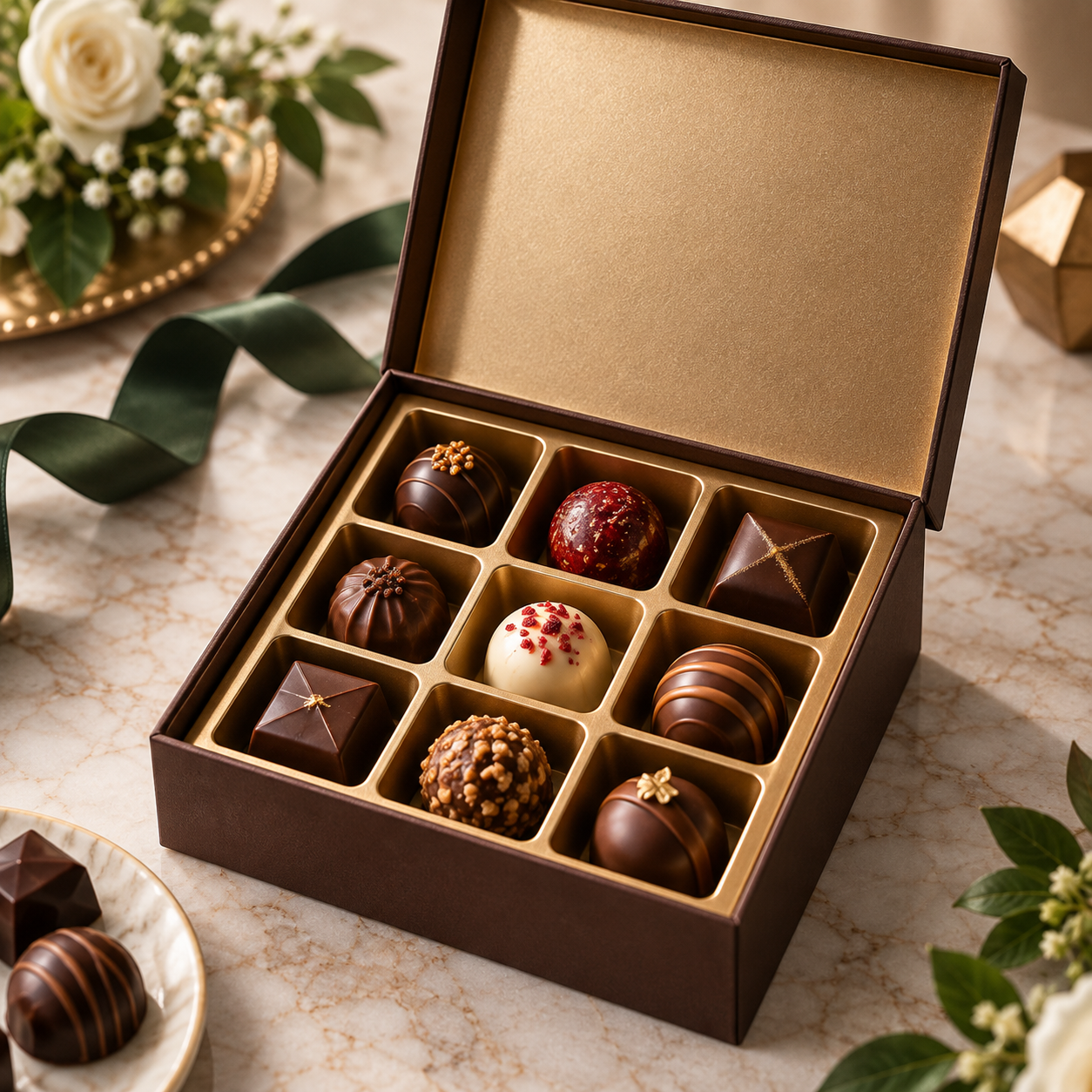
Internal packaging solutions includinginserts, trays and compartments for securechocolate positioning.
Explore Chocolate InsertsFor bonbons, truffles and assorted chocolate collections, the internal arrangement should be established before final outer box dimensions are fixed.
Confirm finished dimensions including wrappers, cups or other primary packaging where applicable.
Define how many chocolates or product units need to be packed in each box.
Select rows, cavities, compartments, layered layouts or mixed-product arrangements.
Allow appropriate spacing around decorated, wrapped or irregular chocolate pieces.
Develop the insert or tray and outer box around the approved internal arrangement.
Select the internal packaging format according to product positioning, presentation, structural support and the relevant food-contact relationship.
Die-cut cavities, platforms, compartments and folded supports for wrapped chocolates, bars and gift collections.
Thermoformed cavity trays for individually positioned chocolates and fixed-count assortments.
PLA tray structures can be evaluated according to the intended product and project requirements.
Molded fiber solutions for selected projects requiring a different internal support format.
Additional support for larger chocolate sets, multipacks and heavier product combinations.
Two-level or multi-level arrangements can be evaluated according to product height, tray clearance and box depth.
Once the internal product layout is confirmed, the outer structure can be selected according to presentation, opening experience and required rigidity.
Efficient printed cartons for chocolate bars, wrapped chocolates and everyday retail packaging.
Printed sleeves for bars, trays and inner packs where a simple structure with a strong branding surface is required.
Sliding structures that create a controlled opening experience for premium chocolate collections.
Two-piece structures providing a wide product reveal when the lid is removed.
Higher-rigidity structures for premium ranges, corporate gifting and seasonal collections.
Die-cut window structures where direct product visibility supports the retail presentation.
Material selection should support the chosen structure, required rigidity, print quality and the visual direction of the chocolate brand.
| Material | Typical Application | Why It Is Selected |
|---|---|---|
| SBS Paperboard | Folding cartons and sleeves | Smooth white surface for detailed printing, controlled colors and decorative finishing. |
| FBB Paperboard | General folding chocolate cartons | Balances stiffness, converting performance and print quality. |
| Kraft & Specialty Papers | Natural or tactile packaging | Provides specific surface texture, color or decorative character. |
| Rigid & Supporting Board | Premium gift boxes and larger sets | Provides additional structural rigidity and support where required. |
Chocolate packaging can combine controlled brand printing with selective decorative finishing across retail, premium and seasonal product ranges.
Printing methods can be selected according to artwork, quantity, material and required color control.
Decorative processes can emphasize logos, typography, patterns and selected presentation details.
Where products share compatible dimensions, one approved structural platform may support different flavors, cocoa percentages, product variants and seasonal artwork.
Quantity, artwork versions and finishing requirements should still be reviewed for each SKU before the final production plan is confirmed.
Food-contact requirements depend on which packaging component actually touches the chocolate. The complete packaging configuration should be confirmed before material or documentation requirements are finalized.
When chocolate already has foil, film, paper or another primary wrapper, the printed outer carton generally functions as secondary packaging.
For bonbons, truffles and pralines placed in cups or trays, requirements should follow the component forming the actual food-contact layer.
Where chocolate directly contacts paperboard, liners, trays, coatings or other components, the material system should be evaluated for the intended application and destination market.
Relevant material specifications, declarations and test reports can be provided or coordinated according to the selected material, packaging construction and project requirements.
Physical sampling helps confirm that the chocolate layout, internal packaging and outer structure work together before production.
Typical sample development takes approximately 3–5 days, depending on the structure, insert or tray, printing and finishing requirements.
Where possible, samples should be checked with the actual chocolate product or an accurate dimensional mock-up before bulk production is approved.
Check chocolate dimensions, cavity fit and required clearance.
Confirm piece count, spacing, alignment and opening presentation.
Verify that the internal packaging locates correctly inside the outer box.
Review folding, opening, closing and structural rigidity.
Check artwork position, dieline alignment and brand colors.
Review foil, embossing, coating and other selected details.
You do not need a finished packaging specification to get started. Send us the information you already have, and we can help review the remaining packaging details.
Tell us whether you are packing bars, bonbons, truffles, pralines, assortments, tasting sets or other chocolate products.
Approximate product dimensions and the number of pieces per box help us evaluate the internal layout.
Send a reference photo, existing box or preferred arrangement if you already have a direction in mind.
If you are not sure which insert or tray is suitable, we can recommend options after reviewing the product layout.
Artwork, logo files or brand guidelines can be shared when available and can also be developed further during the project.
Provide an approximate order quantity and destination country so we can evaluate the appropriate production direction.
Product photos, approximate dimensions, piece count and expected quantity are enough for an initial review. We can help develop the packaging specification from there.
Custom chocolate packaging can start from approximately 500 pieces. Actual MOQ depends on dimensions, structure, inserts or trays, printing, finishing and the number of artwork versions.
No. Send the finished chocolate dimensions, piece count and preferred arrangement if available. We can evaluate the internal layout and outer box dimensions around the product.
Yes. Inserts, cavities and tray layouts can be developed according to the chocolate dimensions, shape, piece count and presentation requirements.
Yes. Custom PET and RPET tray configurations can be developed according to the cavity layout and corresponding outer packaging dimensions.
Yes, subject to structural evaluation. Product dimensions, tray height, clearance, box depth and opening sequence should be reviewed together.
Yes, where physical product dimensions and internal packaging remain compatible. Different artwork, flavors, cocoa percentages or seasonal variants may share one approved dieline.
Relevant documentation and testing can be provided or coordinated according to the selected material, intended food-contact condition, packaging construction and destination market.
Typical sample development takes approximately 3–5 days depending on the structure, insert or tray, printing and finishing requirements.
Send us your chocolate information or existing packaging brief. We can review the product layout and recommend a suitable packaging direction before sampling.