White Paperboard
Smooth printable paperboard for clean graphics and branded packaging.



Piece count is useful for menu planning, but it does not fully describe the packaging requirement.
Six wings, six drumsticks and six mixed bone-in pieces can occupy very different volumes and create different weight distribution inside the box.
The structure should be reviewed according to:
The largest piece often determines the minimum internal width or height.
For mixed bone-in portions, one thigh or breast section may create a much higher packed point than the rest of the meal.
Piece count defines the order. The packed chicken load defines the box.
If one box will serve several menu portions, the largest and heaviest configuration should be reviewed before standardizing the final structure.
Bone-in fried chicken rarely forms a flat top surface.
Drumsticks may sit diagonally, wings may overlap and larger breast or thigh pieces can create isolated high points.
This means average food height is not enough.
The packed portion should be checked for:
Insufficient internal height can contribute to:
Excessive depth is not automatically better.
Too much internal space can increase product movement and create an oversized package relative to the portion.
The objective is practical clearance around the highest packed point while maintaining an efficient overall box size.

Fried chicken can create concentrated loads where individual pieces contact the bottom panel.
This becomes more important with:
An empty carton may feel rigid but behave differently after hot food, oil and concentrated weight are added.
The base should therefore be reviewed according to:
Larger boxes deserve particular attention because increasing box dimensions can also increase the unsupported span of the bottom panel.
The structure should remain practical when the box is:
For heavier applications, more supportive base configurations can be considered according to the filled load and box dimensions.
The purpose is not to claim a universal weight rating, but to match the structure to the intended meal.
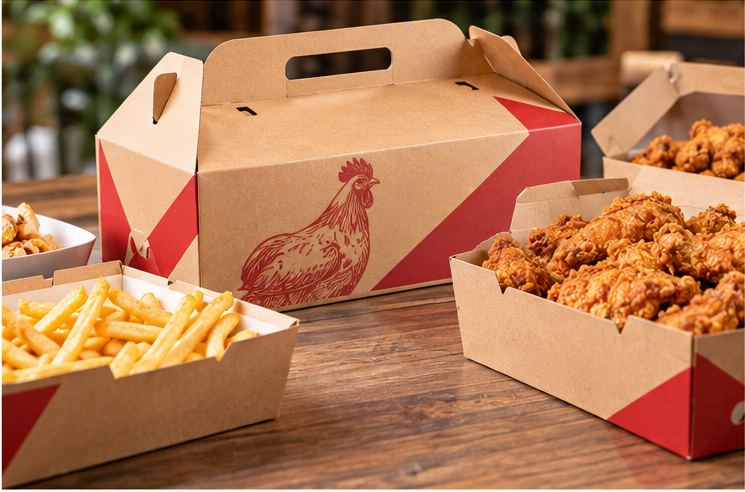
Fried chicken creates a demanding food-contact environment because heat, residual oil and food weight act on the package at the same time.
The most exposed areas often include:
Grease performance should be reviewed according to:
The main concerns are usually:
Additional factors include:
Where grease or sauce exposure is greater, structures with fewer exposed corner seams may be considered to reduce potential migration paths.
The final selection should still be confirmed under the actual food and holding conditions.

Freshly fried chicken continues releasing heat and moisture after packing.
Inside a closed carton, trapped moisture can increase internal humidity and condensation, which may accelerate softening of the fried coating.
Ventilation can help release part of this trapped moisture, but more ventilation is not automatically better.
Large or excessive vent openings may also increase heat loss.
The appropriate ventilation approach depends on:
Vent positions can be evaluated near upper areas or away from primary load-bearing zones when ventilation is required.
The goal is to balance moisture release with reasonable heat retention rather than promising a fixed crispness period.
For some applications, little or no added ventilation may be appropriate. For others, controlled venting may improve the internal environment.
The decision should follow the actual service conditions.
A closure that works well on an empty carton may behave differently when the box is fully loaded.
Irregular pieces can interfere with:
During sampling, check:
The box should close around the meal without relying on the lid to push the chicken downward.
For high-volume foodservice, the closure should also remain practical for kitchen staff.
A structure with fewer unnecessary folding steps can help support consistent packing during busy service periods.
Different fried chicken formats create different structural priorities.
| Chicken Format | Typical Packaging Direction | Main Packaging Focus |
|---|---|---|
| Fried Wings | Side-lock or tuck-top carton | Piece overlap and moisture release |
| Drumsticks | Deeper carton | Irregular height and lid clearance |
| Mixed Bone-In Chicken | Secure-base carton | Uneven geometry and concentrated weight |
| Chicken Tenders | Longer, flatter carton | Length and side clearance |
| Sauced or Glazed Wings | Structure reviewed for higher moisture exposure | Base, corners and closure condition |
| Family-Size Portions | Larger reinforced-base format | Bottom support and carry stability |
| Catering Portions | Larger-volume or carry-style format | Filled weight and handling |
These are packaging directions rather than fixed specifications.
The final structure should be selected according to the actual chicken portion, side-item layout and intended service method.
Empty-carton inspection cannot fully represent the conditions created by hot chicken, oil and filled weight.
Physical samples should therefore be reviewed with the intended portion.
Pack the heaviest intended meal and review:
Confirm that:
Pack the chicken under the intended serving condition and hold it for the normal service or delivery window.
Review:
Inspect the base, fold lines, corners and areas of concentrated food contact after the intended holding period.
If multiple boxes are normally carried together, reproduce the intended bag arrangement and review the lower cartons for deformation.
If several menu combinations will share one box, validate the heaviest, highest and most moisture-demanding configuration first.
To develop an accurate structural recommendation, provide:
If available, include a photo of the complete packed meal, current packaging dimensions and any recurring packaging problems.
These details help determine the appropriate footprint, depth, base structure and closure direction before sampling.
Start with the largest chicken piece, maximum packed height, total filled weight and piece arrangement. Piece count alone does not accurately define the required internal space.
Both matter, but packed dimensions and filled weight provide a stronger basis for structural evaluation.
The required clearance depends on the highest packed piece, stacking pattern and closure design. It should be confirmed with a filled sample rather than a universal fixed allowance.
Not always. Ventilation may help manage trapped moisture, but the amount and placement should be balanced against heat loss and carton structure.
Sometimes, but sauced chicken creates different moisture and migration conditions. The most demanding menu configuration should be validated before using one structure for both.
Base structure, panel span and filled weight should be reviewed together. More supportive bottom configurations may be considered where heavier loads require them.
Yes, when the maximum footprint, height and weight remain suitable for the same box. The largest and heaviest configuration should be tested first.
Yes. Once the final box dimensions and structure are confirmed, production dielines can be prepared for artwork placement and printing setup.
Custom Fried Chicken Boxes should be developed around how the chicken is packed, held and carried.
A reliable specification starts with:
piece size + packed height + filled weight + grease and moisture conditions
These factors provide a stronger basis for packaging development than selecting a generic box by piece count alone.
Get a Custom Quote for Fried Chicken Boxes
Smooth printable paperboard for clean graphics and branded packaging.
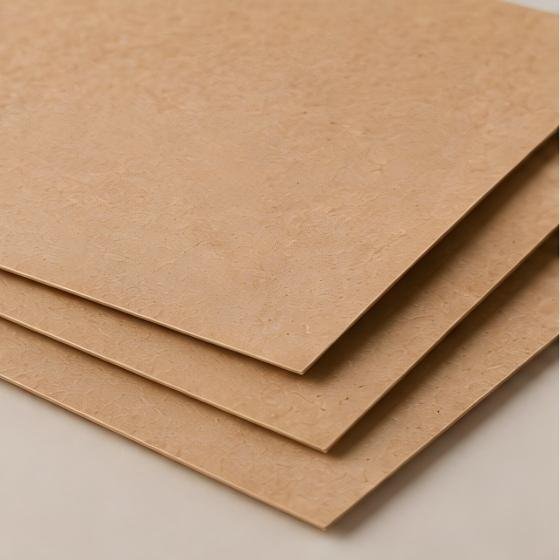
Natural brown paperboard for simple, natural and retail packaging designs.
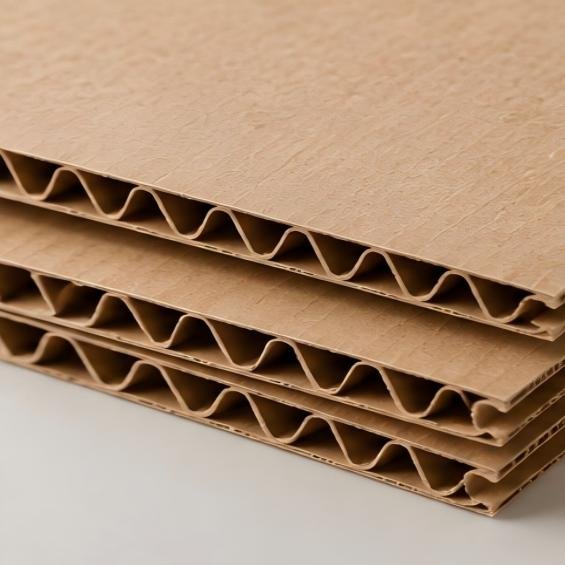
Fluted board construction provides additional rigidity and protection.
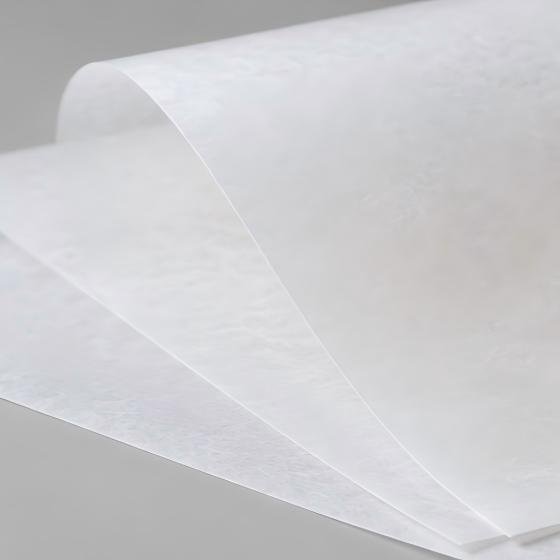
Paperboard designed to provide added resistance to grease and food oils.

Recycled fiber paperboard for secondary and resource-conscious packaging.
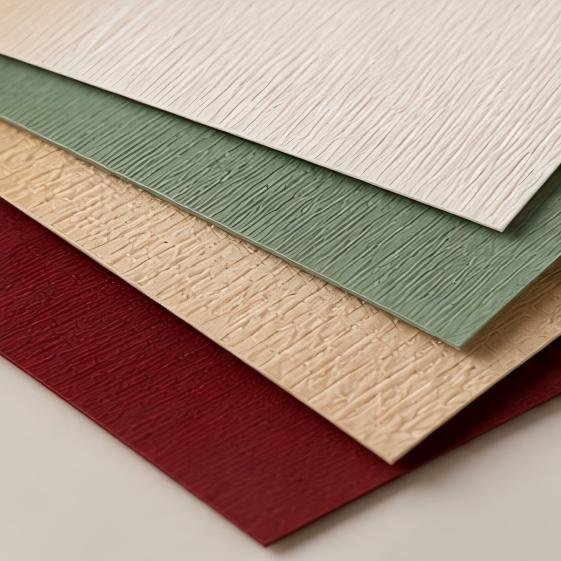
Textured specialty papers for distinctive premium packaging presentation.

Dark paperboard suited to luxury packaging and premium decorative finishes.

Decorative metallic paper for reflective and premium packaging presentation.

Metallic gold details highlight logos, graphics and decorative elements.

Reflective holographic foil creates changing colors and eye-catching effects.

Raised or recessed details add tactile depth to logos and graphic elements.

Glossy or matte surfaces control shine, texture and overall presentation.

Selective gloss highlights create contrast across printed packaging surfaces.

UV printing delivers sharp graphics and controlled surface effects.

Multi-level raised details create stronger depth and sculpted tactile effects.

Metallic silver foil creates clean reflective accents for premium branding.